Dispatch from the Field: Three Interesting Men and a Goose

My Dispatch from Winnipeg (“Winnipeg Tans”) was taken to task on gender equity grounds by two avid readers (both men!) for lack of interesting men. It seems, says one, that the only people I meet are attractive women. This Dispatch will remedy that.

Traveling from Winnipeg across northwestern Ontario, we stopped at Thunder Bay, formerly known as the twin cities of Port Arthur and Fort William. In fact, one person I spoke with still said she was from Port Arthur (old habits die hard – it’s only been Thunder Bay since 1970), but she was a woman so we must move on.

Jack

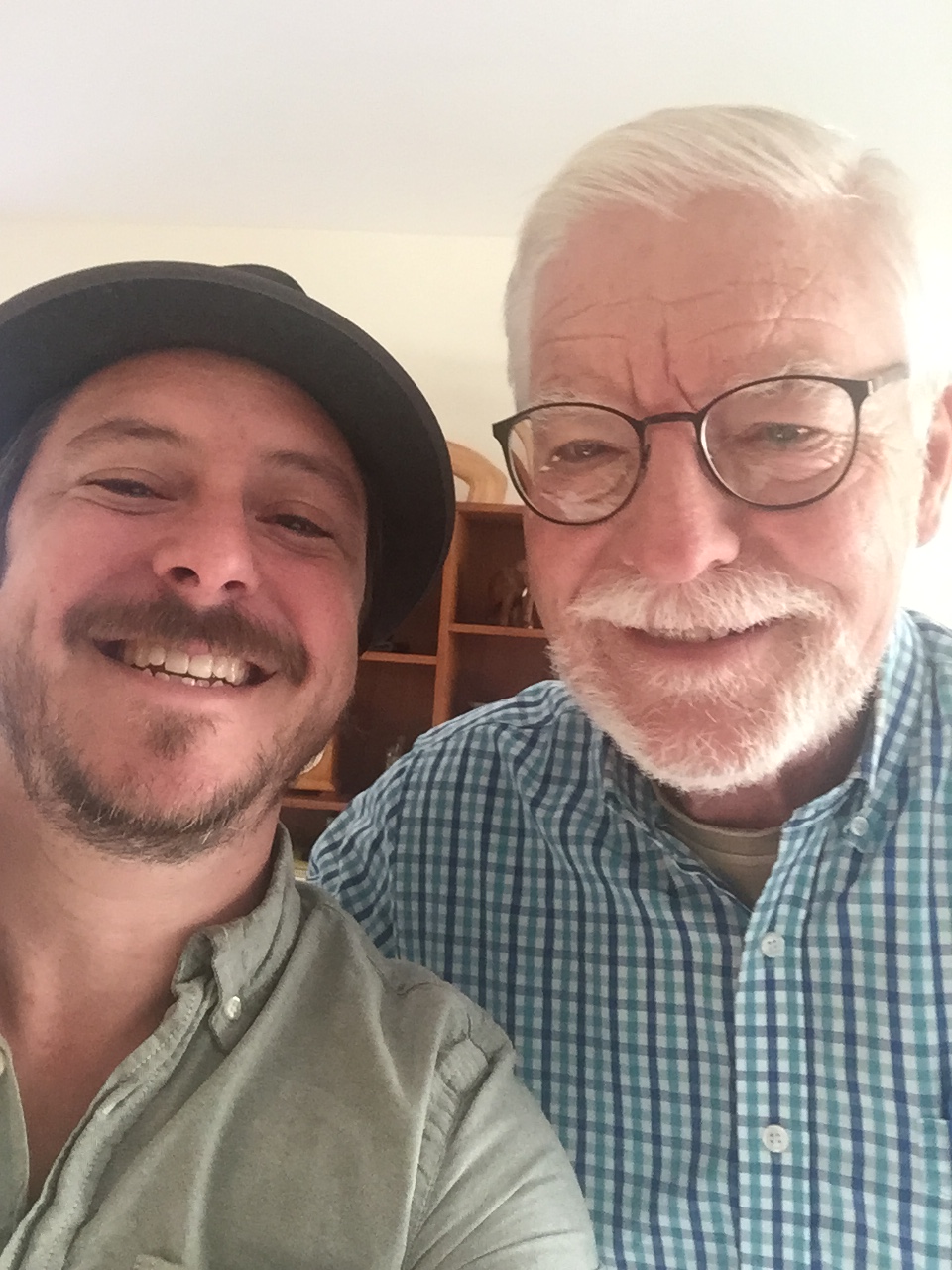
One does not normally associate Australian men with basketball, but there was Jack, all 6’9″ of him, now in Thunder Bay on a basketball scholarship at the local university. Melbourne, it turns out, has a special school for prospective basketball players, and he was recruited to Thunder Bay from there. All smiles, and friendly as all Aussies seem to be, he has two more years to go before deciding where he wants to end up.  Probably not Thunder Bay. By the way, Jack is not standing on a stool, and Carol is not kneeling.

Glenn

Sometimes, you just end up parked at an RV site next to really neat people. Glenn Convey was one of those people. Originally from Thunder Bay, he had a career in IT, ultimately as head of western Canada operations for Cisco. He retired at age 40, bought a 50’ sailboat, and he, wife Linda, and two kids now grown but then aged 5 and 9, sailed the world’s oceans for 6 years. Recently living on Vancouver Island, they are now building a new home on a lakeside lot on one of the many picturesque lakes in northwestern Ontario. He is returning to the vicinity of his youth because “the summers are wonderful here, Vancouver Island was cold and gloomy and rainy.” “Hey,” I told him, “I’m from Portland and I can relate!”  They will winter in Mexico or Arizona or wherever they end up wanting to go, hence the reason for an RV. The boat purchase was an interesting life lesson. Glenn went to buy a boat from a company, already knowing what he wanted. All the salesperson needed to do was say “sign here.” Instead, because he looked young (40 is young!), she talked down to him and treated him “like a Mercedes dealer who says ‘what makes you think you deserve to drive one of our vehicles.'” He was so upset, he walked out and bought a sailboat from another company instead. The salesperson not only lost the sale, but her job. The moral: treat everyone with respect. Linda home-schooled (ship-schooled?) their children. Indeed, the most expensive part of their 6 years on a sailboat was the cost of sending reports and exams back and forth to the mainland. We discussed politics, mid-life crisis sports cars, business, life in general, and each of us were affirming each other’s comments, and finishing each other’s sentences. I’m not sure, but I think he might be my brother.
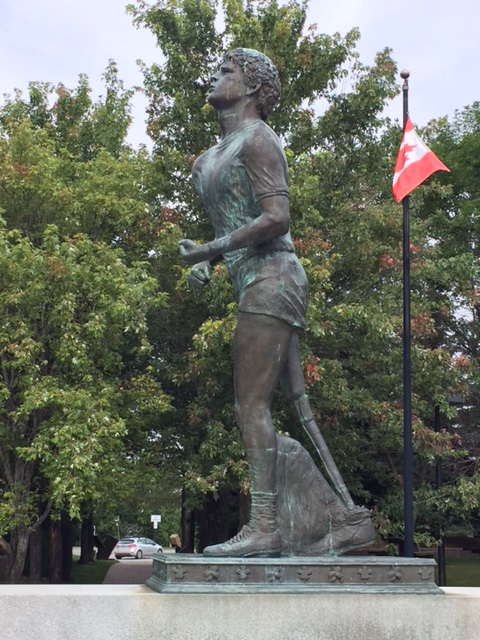
Terry Fox

This statue commemorates a true Canadian hero, Terry Fox. He set out to run across Canada in 1980 to raise money for cancer research. He ran almost a marathon a day in order to make it across Canada in a year. His goal was to raise $1 for each Canadian – $24,000,000 at the time. Oh, and he was a cancer survivor himself who had already lost a leg to cancer, so he did all of this on one leg. He started in Newfoundland, and made it Thunder Bay before the cancer returned and spread to his lungs. The run ended, and he died nine months later, but his legacy has continued, with a Terry Fox Memorial Run taking place annually in his honor to raise more money for cancer research. How much? $650 Million and counting. This statue is just outside Thunder Bay, close to the spot where he fell and could not continue. Tear-filled, we continued to our next destination, Wawa, Ontario.
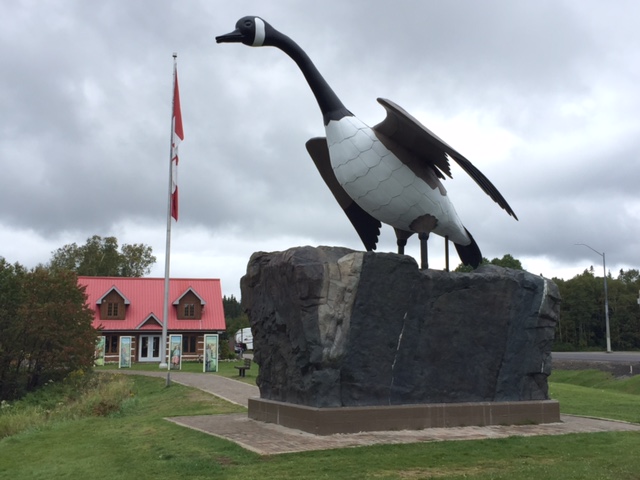
Goose

I am not kidding, the town is called Wawa. And this goose is honestly and truly the pride of Wawa. It commemorates the completion of the Trans-Canada highway in 1960. Why a goose? God only knows. All I know is that it was not a true rendition of a goose because there was no green poop behind the statue. (This was brought to you as a public service for the benefit of my grandchildren who go into gales of laughter at any reference to animal butts or poop).
Dispatch from the Field: A Glimpse into my Parents’ Past.

parents

Both of my parents were born in small Mennonite villages in the area of Russia now called the Ukraine. They and their families came to Canada before either of them was 5 years old, and ultimately settled in an area of Ontario near Niagara Falls called Vineland. That is where they met and ultimately married. The Mennonite Heritage Village in Steinbach, Manitoba commemorates and to a degree replicates those early Russian settlements.

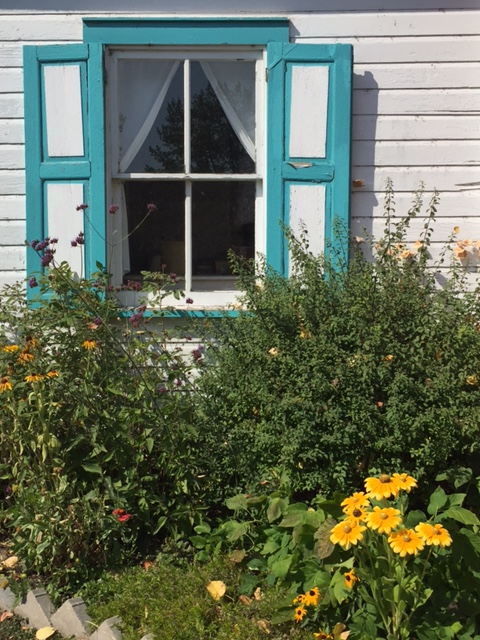
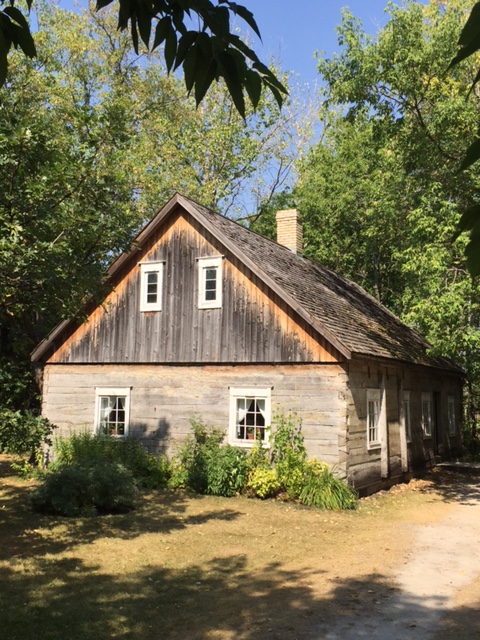
village house

I wandered around, wondering if the houses were like those my parents lived in when they were toddlers. Did my dad stand on his toes to look out a window like this one?

update house window


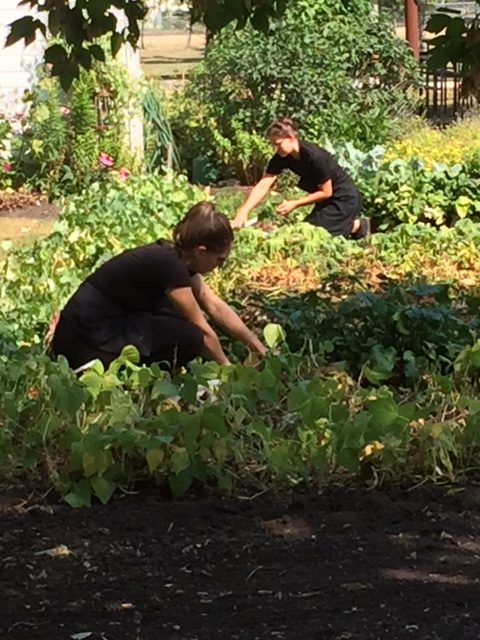
Did my mom crawl around in a garden like this one while her mom harvested the vegetables for the day’s meal?

garden

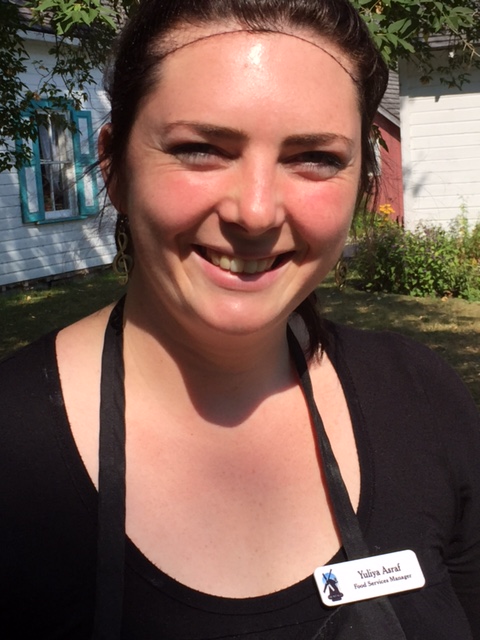
Yuliya told us these vegetables were indeed those served in the restaurant on the premises, and she invited us in.

Yuliya

They served traditional Mennonite dishes like verenika (aka pierogis) and plautz (aka fattening). We heartily partook of the fare, but were confused by the special of the day:
falafel.jpg

For those unfamiliar with the Dutch/German/Swiss origins of Mennonites, suffice it to say   Falafels and Pita are not a part of that heritage.
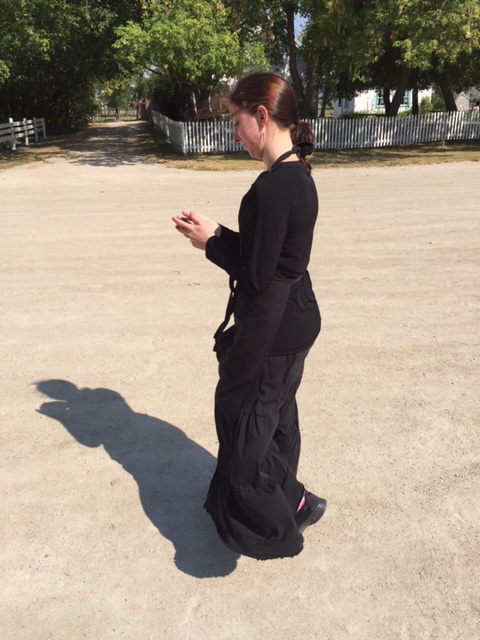
The staff dressed in traditional garb, which really added to the atmosphere, but as soon as they were on break…

smartphone

…out came the smartphones.

siding.jpg

Later that day we were invited to dinner with an old family friend, Mildred Schroeder. My folks set her up on a blind date with David Schroeder in the late 1940’s, when they were all going to the then-new Canadian Mennonite Bible College. The date went well, and Millie and Dave ended up marrying. They celebrated their 67th wedding anniversary before Dave passed away a couple of years ago.

millie.jpg

Millie lives with her daughter Lynette and members of Lynette’s family in a FOUR-generation home. Every few years, the room assignments are moved around based on needs, and the home is remodeled to accommodate those needs. I asked what it was like living in a multi-generation home and she immediately replied “that’s all I’ve ever known.” Even when they were first married with young kids, grandpa lived with them. She loves it, the hustle and bustle, having family around her. Daughter Lynette does most of the cooking, Millie does the baking. And, based upon the pie she served us, she does it very, very well.

To my surprise, one of the members of the household, Mathew, who married a grand-daughter of Millie, was related to me. We had never met until that evening, but Mathew is the son of a cousin of mine from Vineland. Mathew was formerly a touring musician, but that life is tough with two young kids, so now he repairs musical instruments and does some recording at the studio he converted from a garage on the property.

Mathew

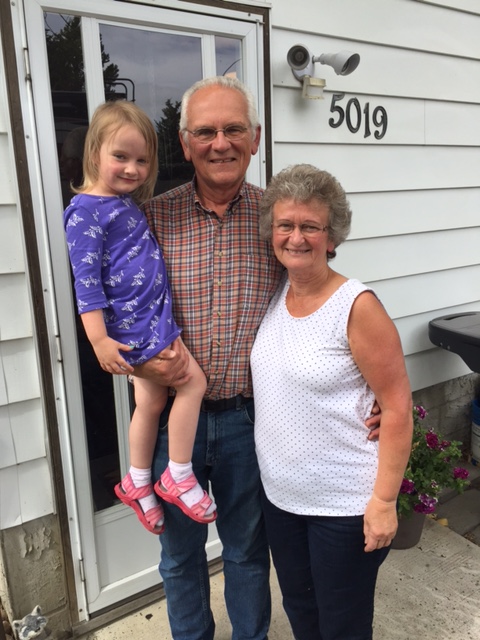
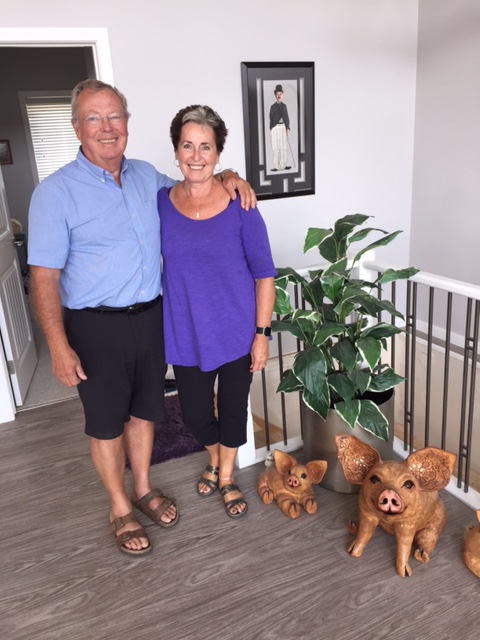
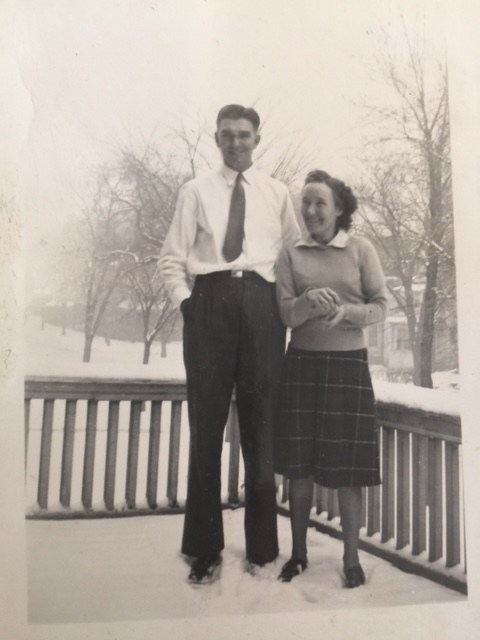
Millie brought out the photo albums, and I poured over them looking for pictures of my folks and others that I had known when I had lived briefly in Winnipeg. I came across the picture of my parents at the top of this dispatch, both seeming happy and carefree, a photo I had never seen before, a glimpse into the early life of my parents, both now deceased.

It was a good day.


Dispatch from the Field: Winnipeg Tans

Winnipegers have better tans than Portlanders. But fewer tattoos. Wherever I went, men and women in shorts and t-shirts were sporting the kind of deep skin color that would make Mary Lou, my friend and favorite dermatologist, cringe.

I asked about this, and was told “we don’t have much summer up here so we have to make the most of it while we can.” Well, we don’t have much summer in Portland either but untanned skin abounds anyway. We make up for the lack of color with tattoos I guess.

Natalia

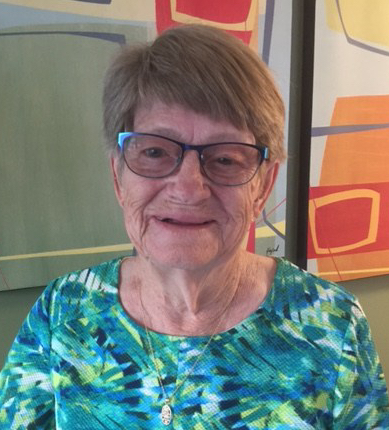
Natalia (a combination of Natalie and Leah) was our server at Deer + Almond, a foodie haven in the Ballatyne area of Winnipeg. Natalia is one-eighth Metis, so only seven-eighths of her glorious skin color can be attributed to summer-maximization. Metis are the people who originated when native Canadians and French fur traders got too cozy during those cold winter nights a couple of centuries or so ago. She has a remarkably upbeat attitude for someone whose mother had a mid-life crisis, met someone, ran away with him to BC after a 9 day romance, and stayed there even after that flame died, leaving Natalia – then age 16 – in Winnipeg to fend for herself. She recently graduated from high school, is trying to decide what to do, and for now is happy working in a restaurant. She gets along better with her mum much better now; they can talk by phone and share things. Distance helps. Her Metis heritage entitles her to a card that will pave the way to university scholarships, but she is not sure she wants to apply for the card. She wants to do it on her own, so she is saving her money in the meantime.

I said it seemed to me that Winnipeg was still a nice, clean city, like I remembered it. When I was 11 or 12 and lived there I took the bus all over the place and felt safe doing so. She paused and said, “well, Winnipeg is the murder capital of Canada.” Oops. “I feel safe around here because of all the restaurants and bars; there are people around even late at night. But 2 or 3 blocks from here it’s another story.”


OK, so Canada is not the crime-free paradise I had hoped. But at least you can sit around a coffee shop and conduct a conversation without worrying about whether someone is liberal or conservative.

linda

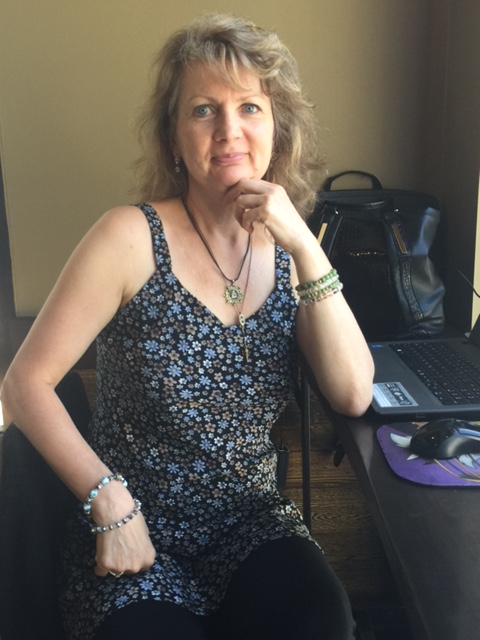
I met Linda Caldwell at the Starbucks in Winnipeg – I meet a lot of interesting people at Starbucks and other coffee shops. Linda is an entrepreneur, and is starting a new business called mind-body fusion. She said after 25 years of teaching fitness, she journeyed into the world of Yoga and never looked back. “Funny,” she says “how you do something for many years and then decide to venture down a new path and enjoy the journey.” Linda told me she was saddened that the country had become so divisive. She was talking about Canada. “I have to be so careful what to say. Depending on what part of the political spectrum people are on, people will tune you out and want nothing to do with you. I hate that.”

Overhearing other conversations after Linda left, one person after the other was talking about extremism, whether of Trump, or liberals, or white nationalists, or antifas. I was hoping to get away from Trump and divisiveness and US politics on this Canada journey, but that’s all they seem to talk about here too. It was time to have a beer.

cindy

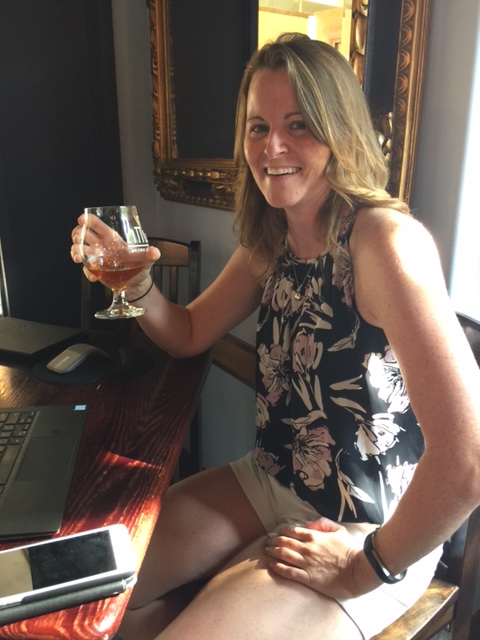
Cindy is another entrepreneur I met at another restaurant on Bannatyne Avenue. Cindy worked for a company that manufactured specialty equipment for high-end homes. The company lost interest in the project, and she wanted a challenge, so she bought that part of the company and now it is growing like a prairie wildfire. She also owns a co-working space that is so successful she’s been edged out to work with her laptop at a restaurant. She has traveled all over the world but returned to Winnipeg. Her family farms three hours away, and she enjoys seeing them and even helping with harvest. But she is not sure she wants to stay in Winnipeg. For now, her business interests are keeping her busy.  With that, she was off to a golf tournament, and I bid so long to Ballatyne.

The Guess Who, of Winnipeg, MB. “So Long Bannatyne.” 1971.

Back to Natalia. Why the rolling pin? The restaurant was out of crushed ice, so she put block ice in a canvas bag and wailed away with a rolling pin. I attribute this resourcefulness to being someone who has been on her own since age 16. You gotta make do.

Dispatches from the Field: Heart of the Continent

winnipeg sign

Winnipeg is not exactly bashful. It brands itself “Heart of the Continent,” and the sign you see as you approach the center of town is about 2 stories high. The sign is in front of its signature attraction: the Canadian Museum of Human Rights, one-third of a billion dollars of aspiration toward universal recognition of basic human rights.

human rights sign

I found myself surprisingly moved as I went through exhibits showing how Canada treated native peoples, Chinese immigrants, West Coast Japanese farmers during WWII, not to mention the human rights failures and atrocities in other countries over centuries. I had always thought Canada was different. But it is not. It has had its black marks, its rays of light, and its continuing struggles to meet its aspirations.

I had also thought the US had most of these struggles behind it. Yet the struggles continue, and in many ways it seems we are going backwards.

This sign said it well: “Like every other human institutional endeavor, justice is an ongoing process. It is never done, never fully achieved. Each decade, each year, each month, indeed each day, brings new challenges.”

workers.jpg

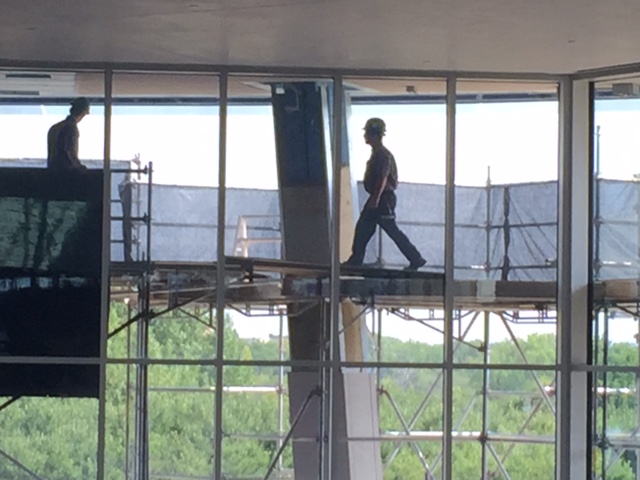
As I toured the museum I noticed scaffolding and workers in various locations. I asked a staff member if the museum was brand new and still being finished. She said “no, it’s four years old, but cracks appear and it needs constant work to maintain.” I was amazed at the allegory.

art

On the Lam in Saskatchewan

I hated Saskatchewan. We moved to Regina when I was 12 and blessedly left for California when I was 14. Nothing good happened to me while we lived in Regina. It was a tough time of life anyway, but on top of normal teenage angst and awkwardness, I was stuck in bed, sick, for months at a time, much of it in the hospital with a bunch of old people, one of whom died in the bed next to mine while I wondered what to do. As I thought about going through Regina on this trip (and yes, I have heard all the limericks), I wondered about facing the ugliest part of my childhood and stopping there.

But I am ahead of myself.

Our visit to Saskatchewan started  on the heels of some wonderful visits with cousins I had not seen for about 50 years. Phil and my cousin Lynda (shown with one grand-daughter in this photo – another was sleeping) kindly had us over for lunch on our way from Calgary to Edmonton.

phil and lynda

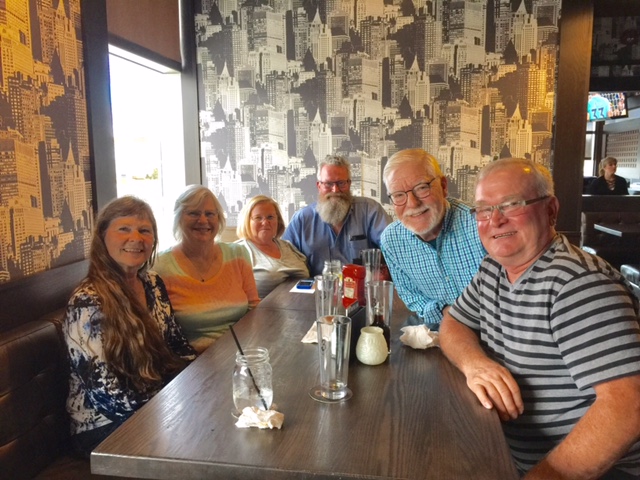
We then had dinner in Edmonton with two more cousins, both brothers of Lynda. Walter and Mary, and Harold and Kathy, had driven two hours to meet us, then drove two hours back home right after the meal.

walter et al

We struggled to remember the last times we had seen each other. Funny how much we have changed in appearance over the years, but the essence that makes us who we are still remains. Walter (with the big bushy beard in the back) was the oldest of the cousins and I really looked up to him, and was always amazed at his strength (all of these cousins being farm kids) and how far he could hit a softball. Harold (far right) was my age and we had the most in common. I remembered him as always smiling, and that has not changed. Lynda was a year younger, and a girl, so we didn’t hang out a lot when I visited their farm as a kid, but there was no mistaking her friendly smile the moment I saw her.

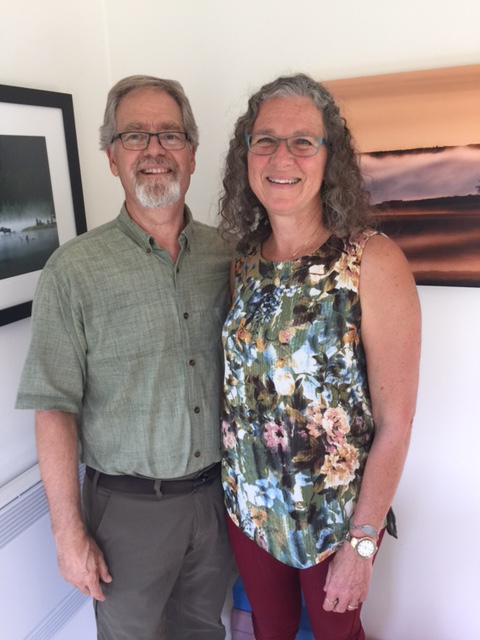
We also had a lovely visit with a cousin from my dad’s side, Carolynn with her husband Doug:

Carolynn and Doug

The photos in the background were taken by Doug, a true artist with a Nikon. Carolynn is involved with physical medicine and finds herself coming up with physical therapy plans in her head for total strangers she comes across. I forgot to ask her to write one down for me. Doug has struggled with debilatating back pain for years, and we both agreed the best way to deal with pain is between your ears and not with pain medication.

One of the highlights of traveling by motorhome is the friends you can meet at the campgrounds. Our first overnight stop in Saskatchewan was a stay at the lake house of some dear friends we met at an RV Park in Sedona AZ this Spring. In Sedona they parked in the space next to us, and we discovered that Harv and I were both retired attorneys, Jean was a retired financial advisor, and they and I were Rotarians. Fifteen minutes after they arrived, we were on our way to the Sedona Rotary Club, and we quickly became friends. They live in Battleford, but have a house on a lake about 30 minutes north, and that is where we stayed with them. We had a delightful time and enjoyed their wonderful meals and hospitality. They took us on a tour of the lake and adjoining village, with Harv giving us astonishing details about the history, issues, and politics of the area. Surprisingly, they have a serious property crime problem in their area, something I would not have expected in rural Saskatchewan. I asked if either of them were involved in some way in local governance. They both smiled, and Harv acknowledged that he was the Mayor.

Harv and Jean


We left Harv and Jean’s lake house for a quick over-night stop in Saskatoon. I began to think back on my childhood in Regina, and wondered if I really should face up to that black hole of my past and go back there. I was sitting in a Starbucks in downtown Saskatoon, wavering, even checking if there were any decent RV Parks in the Regina area (they aren’t).

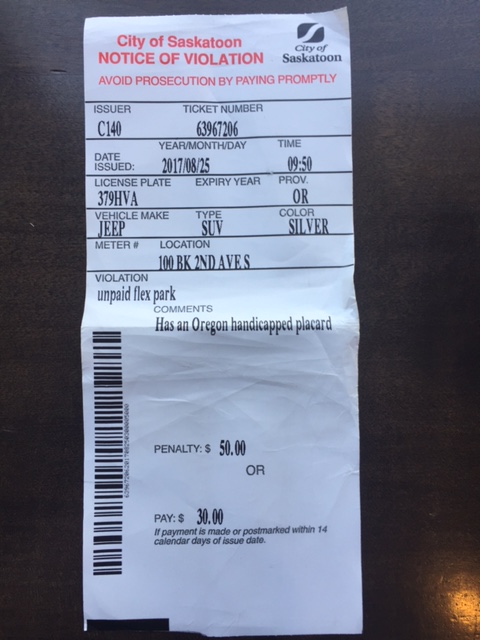
Some, maybe most of my readers may be aware that I have had juvenile-onset rheumatoid arthritis since I was 7. That affliction was running at (literally) a fever pitch when I was a kid in Regina. Modern medicine has since stemmed most of the worst of that affliction, but over the years both feet, and my left ankle, have been fused and do not move. As a result I am the proud owner of a hard-earned handicap placard. I have often said that the ONLY good thing that ever came from having RA was that placard.

Leaving the Starbucks in Saskatoon I found this under my window:

ticket

So much for the benefits of a handicap placard.

So that’s it, I’m fed-up with this Province. We packed up and headed for Manitoba on the Trans-Canada Highway. As we took the bypass highway around Regina, I looked off in the distance at a skyline that is substantially different than the one I left in 1967. And I kept driving, heading east, wondering if there is an extradition treaty between Oregon and Saskatchewan for parking ticket evaders.

Dispatches from the Field: Life on the Northern Fringe

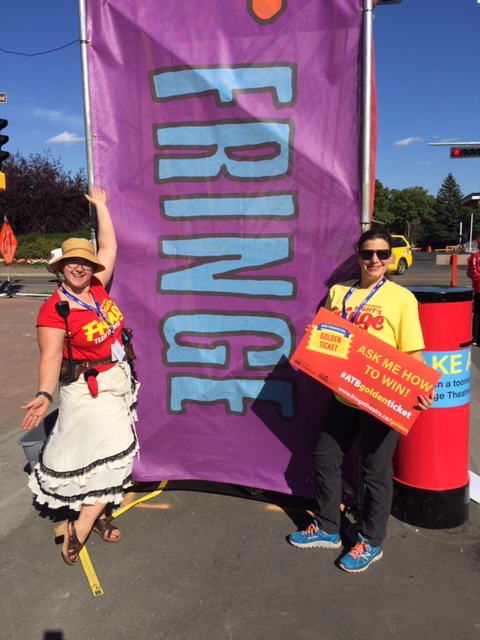
i love fringe

We stumbled into Edmonton the week of the largest Fringe Festival in North America. Dramas, musical shows, gymnasts, performance artists, comedy, jugglers, and on and on. Hundreds of shows in dozens of venues over a 10 day run.

fringe ladies

The shows ranged from serious to hilarious, moving to quirky. All for a nominal admission or a donation. We went to The Canada Show-A Complete History of Canada in One Hour:

the-canada-show-fringe

We learned that Canada’s history is as screwed up as the USA’s. Except that after fighting other people to the death, Canadians say “Oh, sorry.”

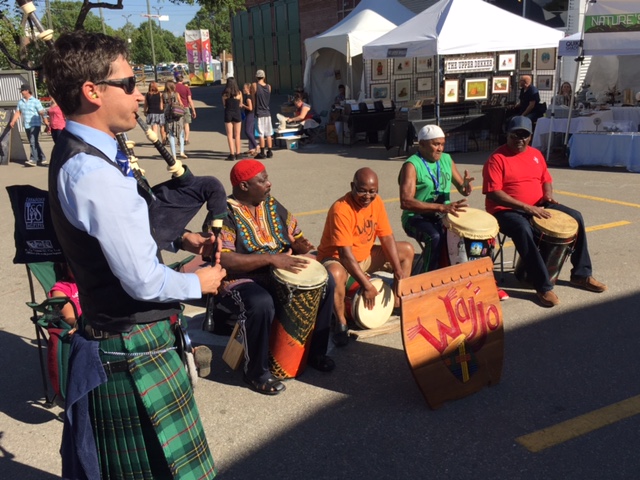
The “Bagpiper with African Drummers” was a seriously quirky act and therefore meets the minimum standards for this dispatch:

bagpipe drums

Edmonton is the northernmost large city in Canada. I don’t actually know if that statement is true, but I doubt that anyone reading this would know otherwise. Anyway, if you are living in a city that is that cold – and I have no idea why you would want to – the best things in life are…inside. So Edmonton has a huge number of theaters and other inside venues for winter entertainment, winter being defined as late August through early July. It also has the largest indoor shopping mall in the world, which we somehow skipped and therefore still had money for dinner that night.

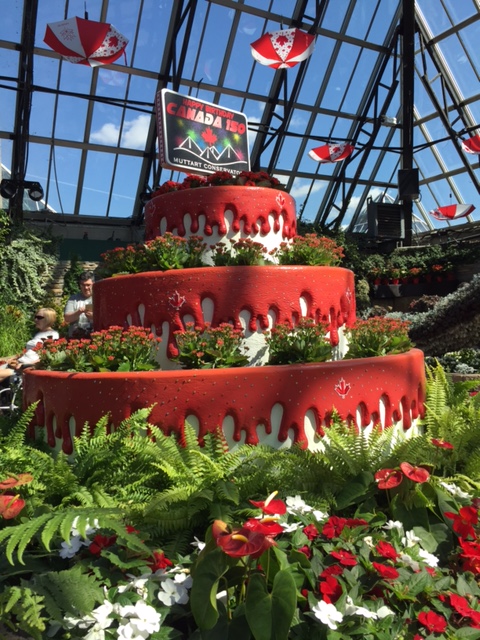
One indoor highlight is the Muttart Conservatory – a botanical garden featuring plants from all over the world in four glass-covered pyramids. Auto-correct wanted to change the name to Mutant Conservatory, and honestly that might have been even more interesting, but it was worthwhile even as it was.

One pyramid was all decked out for Canada’s 150th anniversary:

conservatory

McKenzie pointed out that the topiary behind her is a rainbow trout made of succulents:

McKenzie

I know, you have to look really hard to tell it is a fish not a banana with eyes and things growing on it, but it was a an impressive effort. McKenzie is a kinesiology major, which she chose because some part or other of her body is messed up. I told her I had been a psych major for a brief period because I wanted to find out why I was so screwed up. I am hoping she has better luck than I did.

So far, this blog is a failure as far as my grandkids are concerned, because I have said not one word about animal butts or poop. I am hoping this picture of  T-Rex sneaking into the conservatory will give me a brief reprieve:

t-rex


Dispatches from the Field: Calgary – What is Hip?

What is it that makes a city hip? As soon as I asked someone where to go for a nice meal when we got to Calgary, she immediately said “17th Ave! That’s where all the great restaurants are, the cool shops, the coffee houses; it’s where everybody goes.” In Portland you would say “NW 23rd” or “the Pearl District.” In Phoenix, it’s Roosevelt Row. In Scottsdale, Old Town. All hip. Fresno used to have the Tower District, but the last time I was there it was dying a slow, lingering death and most all the decent restaurants and shops are now dispersed throughout the many strip malls and shopping centers in town. Not hip.

So geography is important – there has to be a critical mass of hipness in a specific area. It can bleed over into other areas, and pop up here and there, but there has to be a locus of hipness.

Also demographics. I would hope to think that  a town of mostly Baby Boomers could be hip, but I don’t think that’s true anymore. It’s ok if some gray hairs like me show up. We will largely be humored into thinking we belong, at least as long as there aren’t too many of us, and we don’t fall asleep in our beers. But there has to be a critical mass of youth, energy, and hormones.

And money. A poor town would struggle to be hip. You have to have enough money to buy your clothes at Goodwill and Nordstrom.

And music. Loud, grinding music flowing out of the coffee houses, bars, and restaurants onto the adjoining sidewalks.

And tattoos.

So Calgary is definitely a hip town. It has 17th Avenue, where I am writing this at a table in Trolley 5. There are mostly young people, but a few gray hairs like me. The music is grinding but they are now playing some Huey Lewis for the benefit of those of us who have not gone to bed yet. Just try to find music from the 70’s or 80’s around here after 10pm. Calgary also has money. Lots of it – mostly based on extracting sources of energy from the ground and selling it.

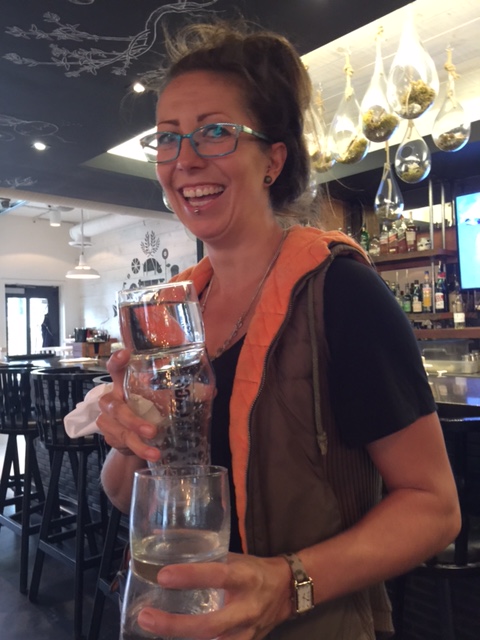
Hillary

Hillary is my bartender. She is young and has a tattoo. I ask her if Calgary is hip. She immediately says yes and describes 17th Avenue as proof. “This is where everybody goes.” That’s it: geography and critical mass.

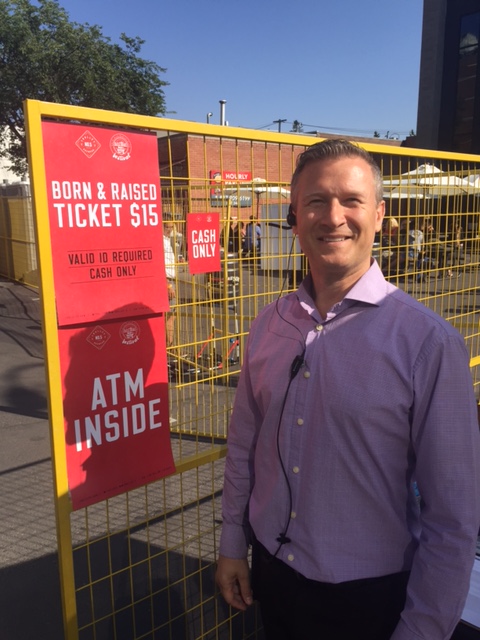
Born and Raised

Calgary is known to be a more conservative part of Canada, and I got worried when I saw a sign “Born and Raised Festival.” Doug, the gatekeeper, told me it was not an anti-immigration gathering, just an excuse to have a party celebrating that the owners of the establishment were born and raised in Calgary. Whew! I passed on the festival anyway.

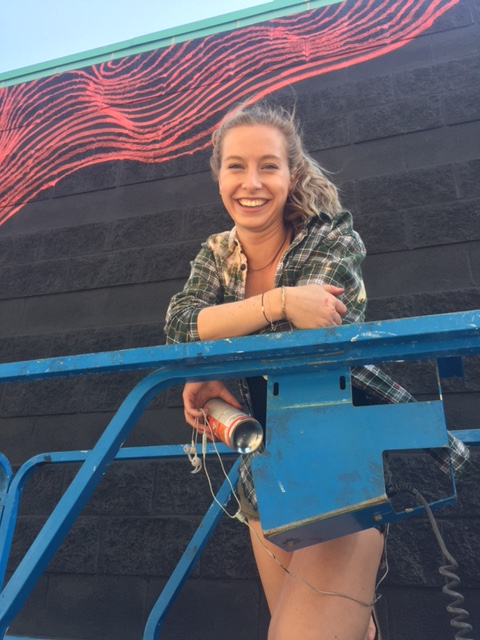
Cassie

Cassie is an artist, doing whatever it takes to pay the bills, and the commission to paint the side of this building is helping. She is using a can of spray paint – legal graffiti I observed and she agreed. She was born and raised in Calgary and therefore qualified to go to the festival, but she said she would pass too. She said the hardest part of painting a wall was painting the black background. The next day, she was still at it.

I walked around and noticed a lot of high rise condos being built. When I was growing up, my parents engaged in a regular activity that I eventually coined “recreational house shopping.” I inherited this from them, and so stopped in at a condo sales office to see what the market is like here. Eva, tall with a gentle accent and hair that alternated between black and red depending on the angle of light, immigrated from Russia in 2005 and is now selling condos in Calgary. She told me about the market, and where the hip places to live are. I told her that both my parents came from the Ukraine before they were age 5, and we talked about where we both had lived over the years. She asked my favorite place to live. I told her Portland first, then Vancouver by a hair, then Toronto. I asked her the same question. She said Paris. I felt badly for Calgary.

Is Edmonton hip? We’ll find out tomorrow, but Katrina (who can juggle more dishes while conducting a conversation than anyone I have ever seen) hesitates a moment (not a good sign for hipness) and then says “yes!”

Katrina from Market

She continued, “It’s got White Avenue where all the great restaurants are. It’s where everybody goes.” There we are: geographic locus and critical mass. Hip.


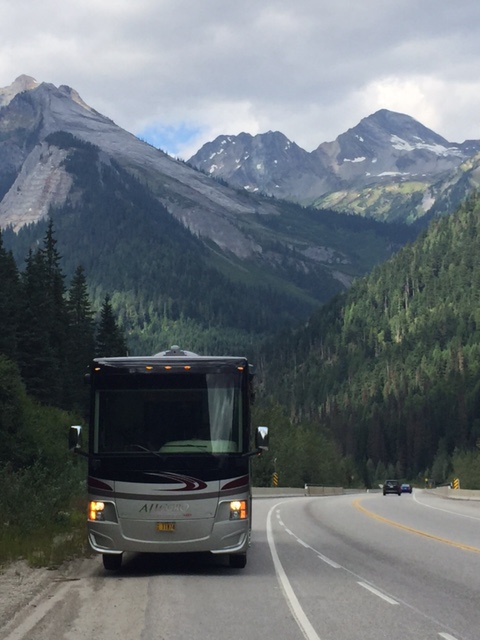
Dispatches from the Field: The Canadian Rockies.

rockies

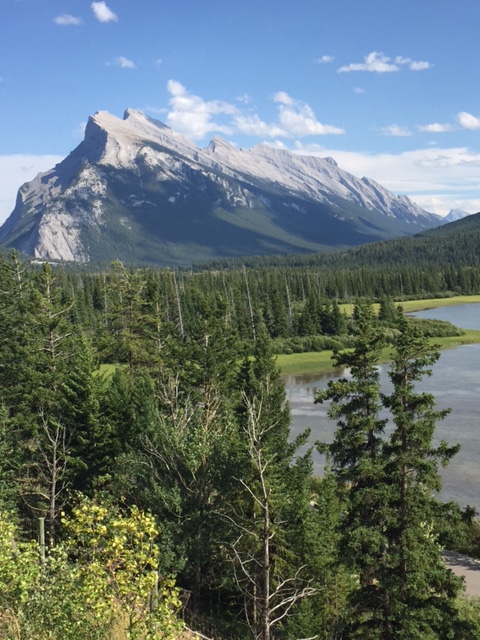
We traveled through the Canadian Rockies, in awe at virtually every curve. We’ve enjoyed the national parks there in years past, but Mt. Rundle never gets old:

Rundle

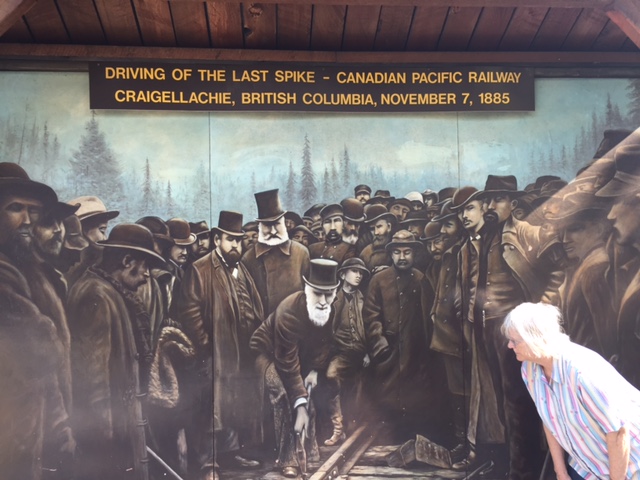
The Rockies figure large in the story of the Canadian Transcontinental Railroad, which is filled with adventure, corruption, and intrigue, much like the story of its US counterpart. The captains of industry who connected the “Eastern Shore” to the “Western Strand” were pretty greedy bastards. Nevertheless, they are honored by statues, artwork, and place-names all over the place.

last spike

When I was young, my dad gave me a copy of the seminal book on this, the “Last Spike” by Pierre Burton, which reads much like Stephen E. Ambrose’s “Nothing Like it in the World” for the American railroad. I learned most of my Canadian railroad history, however, from Gordon Lightfoot’s “Canadian Railroad Trilogy.” Canadian Railroad Trilogy by Gordon Lightfoot

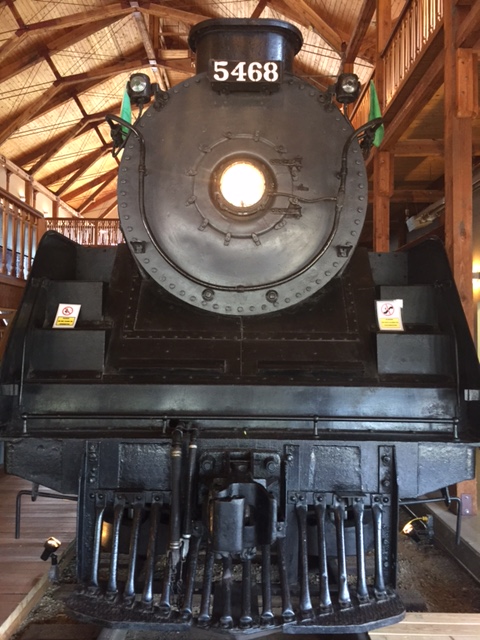
Revelstoke is the closest town to the place where the construction crews going west and east met. Out of obligation, therefore, it has a railroad museum. Not a very large or impressive museum, but they do have a big steam locomotive. The massiveness always amazes me.

Loco1

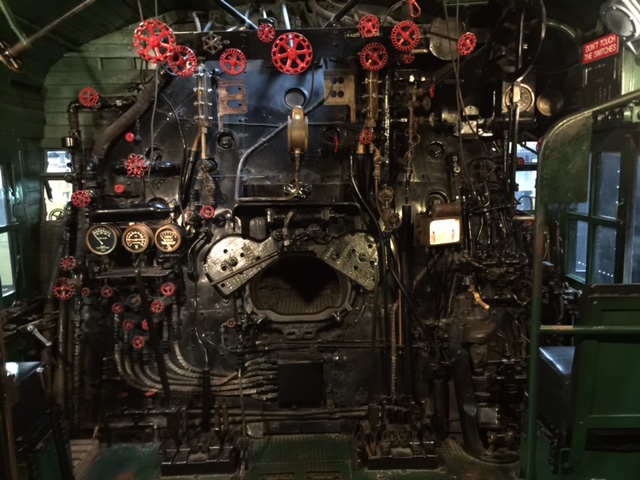
I’ve seen many and what I find most interesting are the controls and instruments that the crews had to know how to use in order to get the train to move without the boiler blowing up. Every bit as complex and difficult, and way more physically demanding, than what an airline pilot has to deal with today, and I suspect even my airline pilot friends might agree with that.

Steam engine controls

No simulators back then either.


On Becoming a Teenager Again

Jim Coates BMW GS

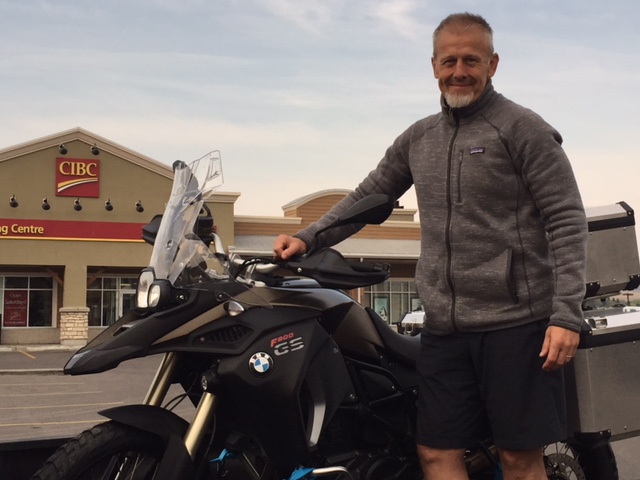
Jim Coote wants to become a teenager again. After 33 years with an oil company in Northern Alberta, going from firefighter/EMT to management, he is planning to retire in a year or two, and move to the Calgary area. He knows the secret. Find some buddies and find a purpose, something to do, some reason to live, something that let’s you be a teenager again.

I met Jim in a Starbucks. He had just taken delivery of his bike – a BMW GS 800 that looked so new it was hard to believe its first owner had taken it to Alaska already. He was beaming.

After telling me his story he asked mine. I told him that despite all the years of preparation, retirement proved to be a challenge for me. After 40 years in law practice, I went from multiple daily interactions with wonderful clients, to…silence. Overnight. No more crush of emails. No long line of clients waiting for me to meet them or return their calls. Empty calendar. Silence.

After 3 months, I was ready to take the Oregon Bar and start all over again in Portland. Fortunately, at about that time I had lunch with my clinical psychologist friend, Irene. She looked me right in the eye and said, “OK Ken what’s going on?” She helped me realize what should have been obvious to me but wasn’t. I didn’t just retire – my whole life changed. We moved from central California to Portland, we left a sprawling ranch house on 15 acres for a 19th story condo, and we left a life-long network of friends, family, and community we had built up over 50 years. Just realizing that helped enormously, and things improved from that point on. I got involved with some non-profits, became intentional about meeting new friends, and re-dedicated myself to a long-held passion for photography and writing. I now feel like a teenager again.

For Jim, becoming a teenager means expanding his social network and finding common interests to indulge with his buddies. For me, it’s traveling, writing and photography, and meeting new people along the way.

What would it mean for you to become a teenager again?

Uniquely Canadian

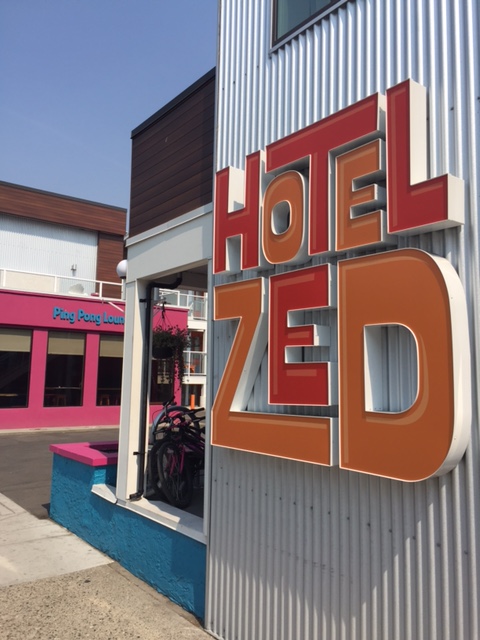
Hotel Zed

As in, x, y, zed. How strange it was to move to the US fifty years ago and realize that Americans did not know how to pronounce the last letter of the alphabet. Zee? Really? Well, that was then. Now I cannot understand why Canadians have not learned how to pronounce it after fifty years.

Poutinerie

The story is that poutine originated in the 1950s in Warwick, Quebec, at a restaurant called Le Lutin qui rit. Upon being asked to add cheese curds to a customer’s fries, owner Fernand Lachance responded, “Ça va faire une maudite poutine,” or, “That’s going to make a dreadful mess.” So he smothered the concoction with gravy too.

Somehow it works.